Gothamist
A non-profit newsroom, powered by WNYC.
Gothamist
Listen Live
News
Researchers See Link Between Zika & Global Warming

By
Scott Heins
Published Feb 18, 2016
Modified Feb 18, 2016
Share
FacebookTwitterRedditEmail
Never miss a story
Email address
By submitting your information, you're agreeing to receive communications from New York Public Radio in accordance with our Terms .

By
Scott Heins
Published Feb 18, 2016
Modified Feb 18, 2016
Share
FacebookTwitterRedditEmail
We rely on your support to make local news available to all
Make your contribution now and help Gothamist thrive in 2026. Donate today
Gothamist is funded by sponsors and member donations
Earlier this moth, the WHO declared the Zika virus an international public health emergency. The spread has been described as "explosive," and the Organization predicts that as many as four million people could become infected with the disease by year's end. Doctors and scientists have traced an apparent link between the disease in pregnant mothers and microcephaly, a birth defect that causes unusually small heads and brain damage in newborn babies.
Now, some experts are beginning to link the outbreak of Zika and other viral diseases to global warming. Similar to malaria, yellow fever, and dengue, Zika is primarily transmitted by mosquitos that thrive in warm climates.
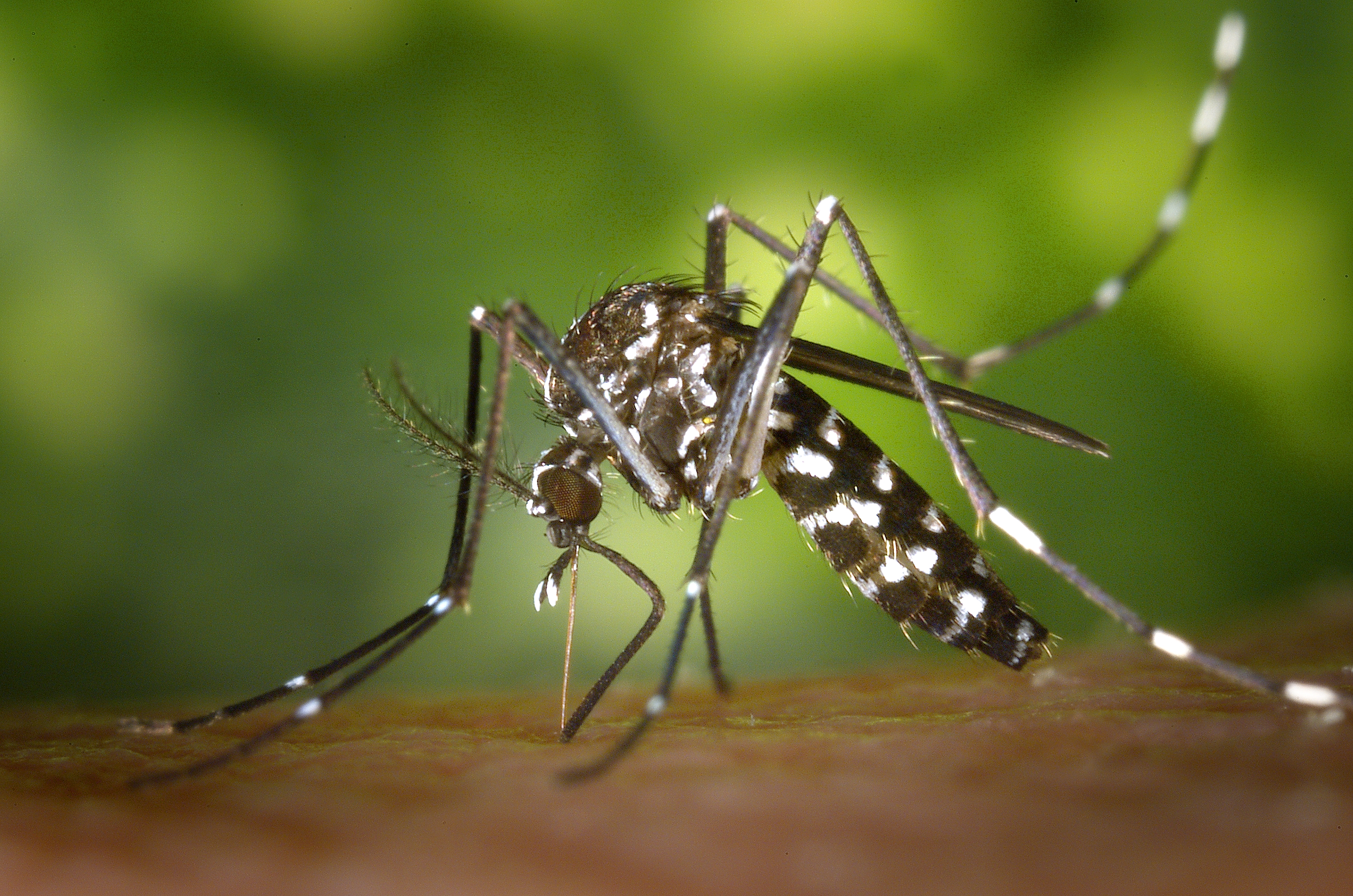
Zika and dengue are being transmitted by the Yellow Fever mosquito Aedes aegypti. That creature adapted long ago to live in human settlements, and developed a concomitant taste for human blood.
"With rising temperatures, you're actually speeding up the whole reproductive cycle of the mosquitoes," Charles B. Beard told the New York Times. Beard is head of a unit studying insect-borne diseases at the Centers for Disease Control and Prevention, and pointed out the ties between climate change and the spread of dangerous disease. "You get larger populations, with more generations of mosquitoes, in a warmer, wetter climate. you have this kind of amplifaction of the risk."
"The virus has to reproduce in the mosquito for a certain period before it can be transmitted to another person in a subsequent bite. The higher the air temperature, the shorter that incubation period," the Times wrote.
The planet is indeed getting warmer. 2015 was the hottest year in recorded history, with 2016 expected to be even more extreme. As the planet continues to warm up, mosquitos like the ones that carry Zika will reproduce faster, and likely expand into more temperate climates—such as the United States. Research cited by the Times suggests that, if population growth and climate change trends continue to worsen, as many as 8 or 9 billion could be exposed to Zika-carrying mosquitos by the end of the century.
Currently, there have been at least five confirmed cases of human Zika infection in NYC, but in each case the infection happened elsewhere. "We are very concerned about the onset of the mosquito season at the beginning of April," Mayor de Blasio said last week. De Blasio says New York City is prepared to combat a possible outbreak, and cited the Ebola scare of 2014 as a test of the city's readiness. "New Yorkers should rest assured that the finest medical minds and scientific minds are being tapped to help us address the situation," he said.
Anxiety over the dangers of the Zika virus has also had an effect on the Catholic Church. Speaking from his plane Thursday, Pope Francis suggested that using contraception to stop the spread of the virus between infected person is, in the eyes of the church, permissible. "Avoiding pregnancy is not an absolute evil."
Tagged
climate change
global warming
zika
Zika virus

Scott Heins
Scott Heins is a freelance photo and video journalist based in New York City, and a frequent contributor to Gothamist + WNYC. His work often centers around labor rights, housing, and policing. In 2018-2019 he traveled to four states while covering a wave of public school teachers strikes, with work featured in The New York Times, The Intercept, Getty Images, Splinter, and Bloomberg Photos. Scott is a dues-paying member of the National Writers Union's Freelance Solidarity Project.
Read more
Gothamist is funded by sponsors and member donations
Gothamist is funded by sponsors and member donations
MORE news

Inside the plan to fix the nearly collapsed Pfizer Building, 1/64th of an inch at a time
Construction crews will jack up sagging floors where two key structural columns bent in July.

By
David Brand
Published Oct 16, 2026 at 1:54 p.m. ET

School bus carrying autistic students got lost in Brooklyn for 4 hours last year
A city investigation discovered that when the bus arrived at its destination in Crown Heights, one student was lying in a pool of urine.
By
Jessica Gould

News
School bus carrying autistic students got lost in Brooklyn for 4 hours last year
A city investigation discovered that when the bus arrived at its destination in Crown Heights, one student was lying in a pool of urine.
By
Jessica Gould
NYC’s bridges can last 'forever,' if we take care of them
By
Clayton Guse
Queens mother charged with murder in death of 5-year-old daughter, NYPD says
By
Ryan Kost
NYC’s whiplash weather continues into weekend with heavy winds, chilly temps, NWS says
By
Monica Melton
Never miss a story
Catch up on the most important headlines with a roundup of essential NYC stories, delivered to your inbox daily.
Sign upEmail address
By submitting your information, you're agreeing to receive communications from New York Public Radio in accordance with our Terms .